In today’s interconnected world, Ethernet switches are vital for managing and monitoring field equipment in challenging outdoor environments. From offshore rigs and pipelines to power stations and wind farms, industrial Ethernet switches ensure reliable connectivity where it’s needed most. As Ethernet becomes a backbone for industrial operations, the demand for rugged switches capable of withstanding harsh conditions has never been higher. This guide explores the critical factors to consider when selecting an industrial Ethernet switch and how Maisvch Technology can provide solutions tailored to your needs.
Understanding the Challenges of Industrial Ethernet Switches
1. Extreme Temperatures
Industrial Ethernet switches are often deployed in environments where temperatures can vary significantly. Extreme heat or cold can impact network performance, potentially leading to power supply issues, voltage fluctuations, and hardware malfunctions. Reliable operation in such conditions requires switches with wide temperature range specifications.
Key Features to Look For:
- Wide Temperature Range: Choose switches designed to operate within a broad temperature range, such as -40°C to 75°C, to ensure they remain functional in diverse environments.
2. Thunder and Lightning
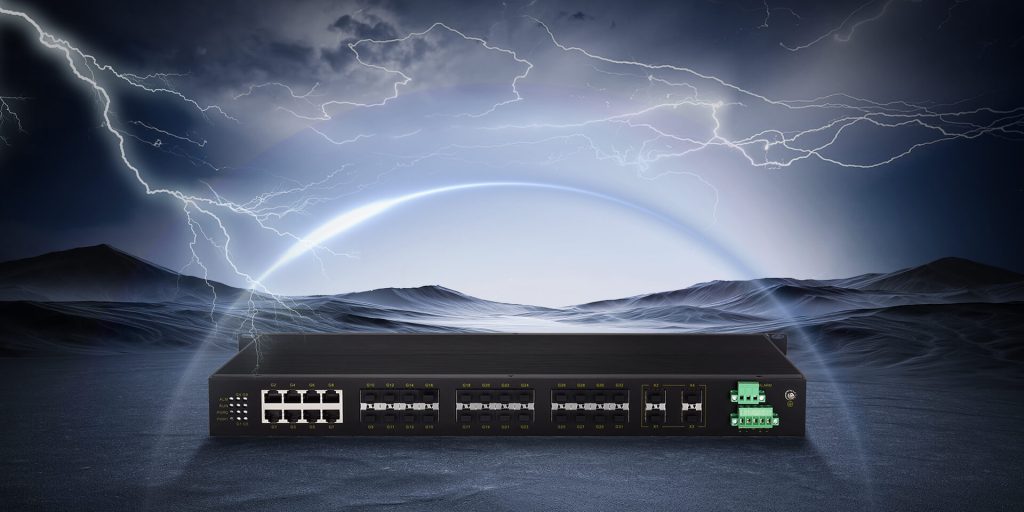
Outdoor Ethernet switches are susceptible to lightning strikes, which can cause severe damage through power surges and electromagnetic interference (EMI). Even with surge protection, a direct or nearby lightning strike can overwhelm the switch’s defenses, leading to costly downtime and equipment failure.
Key Features to Look For:
- Surge Protection: Opt for switches with built-in surge protection mechanisms to shield against power surges caused by lightning.
- EMI Protection: Ensure the switch has electromagnetic compatibility (EMC) certifications to mitigate interference from electromagnetic fields.
3. Rain and Water Ingress
Rainstorms and high moisture levels can lead to water ingress, causing short circuits and hardware damage. Additionally, corrosion from prolonged exposure to moisture can degrade switch performance over time.

Key Features to Look For:
- IP Ratings: Look for switches with high Ingress Protection (IP) ratings, such as IP65 or IP67, to guard against water ingress and corrosion.
- Corrosion-Resistant Materials: Ensure switches are built with materials that resist corrosion and withstand physical stress from environmental hazards.
Tips
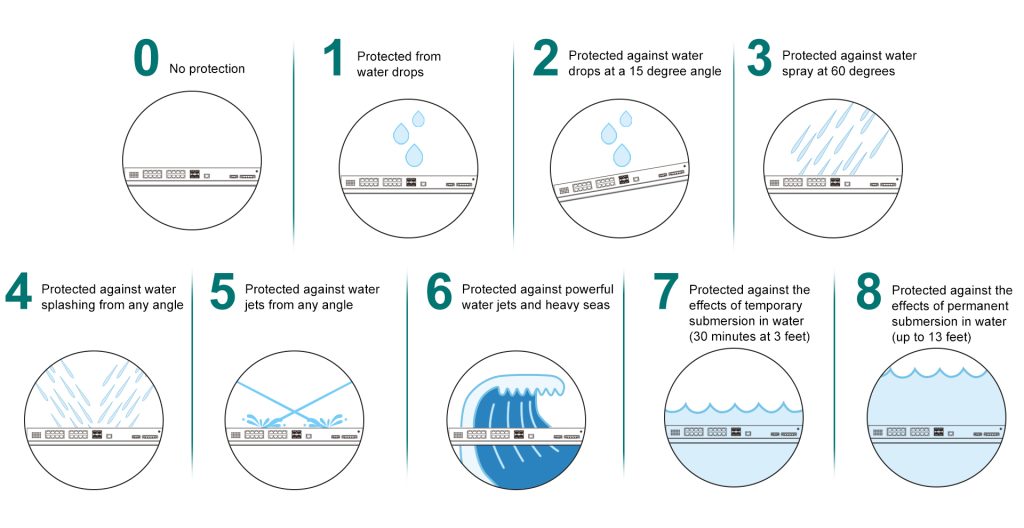
| IPX0 | This rating indicates that the device has no special waterproofing capabilities and that liquids are free to enter the interior of the device. |
| IPX1 | At this rating, the device can withstand the effects of vertical drips but may be subject to liquids in other situations. |
| IPX2 | The switch device is protected against water drops at a 15 degree angle, but may likewise be affected by liquids in other situations. |
| IPX3 | This rating indicates that the equipment is protected against water spray at 60 degrees and is suitable for some outdoor environments. |
| IPX4 | Equipment at this rating can withstand jets of water directed at the equipment from any direction, providing more comprehensive liquid protection. |
| IPX5 | The equipment can withstand the spray of a water jet gun, which is useful for environments that require regular cleaning, such as industrial equipment. |
| IPX6 | Equipment with this rating can withstand large jets of water, such as high-pressure cleaning. This rating is typically used in scenarios that require strong waterproofing capabilities, such as marine equipment. |
| IPX7 | The switch device can be immersed in water for a short period, typically 30 minutes. This waterproof capability is suitable for some outdoor and underwater applications. |
| IPX8 | This is the highest level of waterproofing where equipment can be continuously submerged under specified conditions, such as a specific depth of water and time. This type of protection is typically used in underwater equipment, such as diving equipment. |
4. Dust and Sandstorms
In arid environments, dust and sand can infiltrate equipment, leading to overheating and component damage. Protecting your Ethernet switches from dust and particulate matter is crucial for maintaining operational reliability.
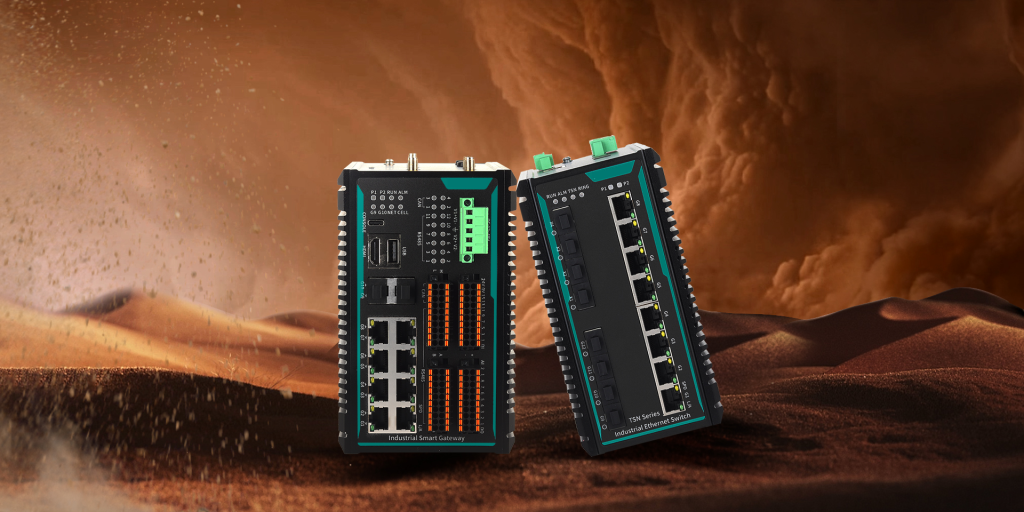
Key Features to Look For:
- Dust Protection: Choose switches with high IP ratings for dust protection, such as IP5X or IP6X, to prevent dust from entering and causing damage.
Why Maisvch Technology Stands Out
At Maisvch Technology, we understand the critical role that industrial Ethernet switches play in maintaining network integrity under extreme conditions. With over 23 years of experience in the industrial communication field, we offer switches engineered to excel in the harshest environments. Our products feature:
- Advanced Surge and EMI Protection: To safeguard against electrical disturbances and ensure uninterrupted operation.
- Wide Temperature Tolerance: To perform reliably in a range of temperatures from -40°C to 75°C.
- High IP Ratings: To protect against water ingress, dust, and particulate matter, ensuring long-term durability.
- Corrosion-Resistant Construction: To withstand exposure to moisture and other environmental stresses.
Conclusion
Selecting the right industrial Ethernet switch is crucial for ensuring reliable network performance in demanding conditions. Consider factors such as temperature range, surge protection, IP ratings, and corrosion resistance when choosing your equipment. Maisvch Technology’s commitment to quality and innovation means you can trust our switches to deliver exceptional performance even in the harshest environments. Explore our range of rugged industrial Ethernet switches and experience the reliability and durability that has made us a leader in the field.
For more information on our products and how they can meet your specific needs, contact our experts today.